
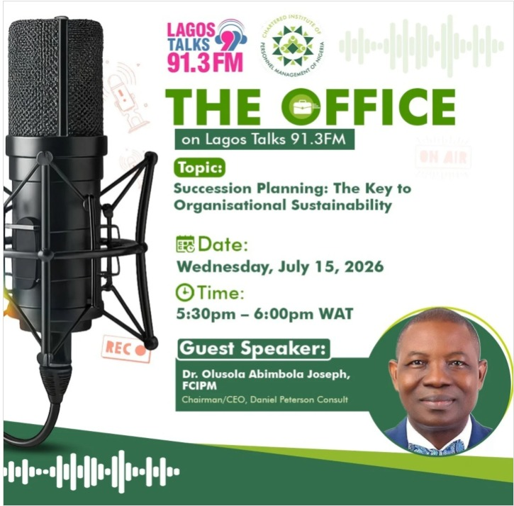
SUCCESSION PLANNING: THE KEY TO ORGANISATIONAL SUSTAINABILITY
Introduction
Succession planning is a strategic business priority that safeguards organisational continuity, preserves institutional knowledge and supports long-term performance. It goes beyond replacing the Chief Executive Officer (CEO) to identifying and developing capable successors for all critical positions. An effective succession plan strengthens talent retention, improves leadership quality and minimises operational disruption when key employees exit. Its success requires shared ownership by HR, management and the board, objective assessment of potential successors, and a culture that promotes mentoring, knowledge sharing and accountability.
Why Succession Planning Should Be a Strategic Business Priority
Succession planning is fundamentally about business continuity and managing the risks associated with employee exits through retirement, illness, resignation or other circumstances. Organisations must recognise that stakeholders depend on the institution, not just the individuals occupying key positions. Therefore, systems must be established to ensure that operations and strategic priorities continue seamlessly when people leave.
For instance, if the Head of Human Resources exits during the second year of an organisation’s five-year strategic plan, someone must be adequately prepared to sustain its implementation. This makes it essential to have at least one or two employees understudying each critical role. Succession planning also strengthens employee engagement and retention. High-performing and high-potential employees are more likely to remain with an organisation when they see opportunities for career growth and leadership advancement. It also creates a strong talent pipeline, improves decision-making and reduces the time and cost associated with external recruitment. With qualified successors readily available, organisations can fill critical vacancies quickly and maintain business continuity.
Overcoming Resistance to Understudy Arrangements
One major challenge in succession planning is the reluctance of some managers and department heads to mentor potential successors. Some perceive understudy arrangements as a threat to their positions, fearing that developing someone equally capable could make them dispensable. An experience shared by the speaker involved a bank where a departmental head refused to coach and mentor his designated successor. Eventually, the incumbent lost his position when it became evident that the successor was equally capable. This illustrates the danger of making individuals indispensable. Sustainable organisations depend on strong systems, structures and shared institutional knowledge rather than individual control. Leaders should therefore see mentoring and knowledge transfer as essential responsibilities, not threats to their relevance.
Succession Planning Must Go Beyond the CEO
A common misconception is that succession planning focuses exclusively on replacing the CEO. This narrow approach exposes organisations to significant operational risks and potential loss of institutional knowledge. Critical positions such as the Head of Finance, Business Development Lead, Project Manager and Head of Relationship Management also require succession plans. Losing individuals in these roles without prepared replacements can disrupt revenue generation, project delivery and customer relationships. Succession planning must therefore cover all positions that are essential to organisational performance. The objective is to ensure that no single person’s departure threatens the organisation’s stability or ability to deliver its objectives.
The Role of Human Resources
Although HR provides leadership in designing and coordinating succession planning, it should not be regarded as an HR-only responsibility. It is a strategic business imperative that requires the active involvement of the board, executive management and departmental heads. HR serves as the architect of the framework by identifying critical roles, developing competency requirements, establishing talent pipelines and periodically reviewing potential successors. It also provides the data and assessment tools needed to match individuals with future organisational needs. However, HR must secure the commitment of the CEO and other senior leaders to ensure ownership and effective implementation. Managers occupying critical positions must also participate actively by identifying, coaching and preparing potential successors.
Identifying and Assessing Potential Successors
Potential successors should be assessed objectively against three key criteria:
- Performance: Consistent delivery of results against established standards and key performance indicators (KPIs). Performance trends over two to three years, alongside relevant customer feedback, should inform the assessment.
- Potential: The individual’s capacity to assume greater responsibilities, demonstrated through competencies, leadership ability and successful involvement in strategic projects.
- Value Fit: The extent to which the individual demonstrates and contributes to the organisation’s values, culture and long-term objectives.
Beyond these criteria, potential successors should demonstrate three essential qualities: Head, Heart and Hands. Head represents strategic thinking and an understanding of the organisation and its business objectives. Heart reflects emotional intelligence and the ability to manage and lead people effectively. Hands represents execution capability and the ability to translate decisions and strategies into tangible results.
These qualities are essential for building a credible leadership pipeline across critical organisational functions.
Merit, Familiarity and Other Leadership Attributes
Although familiarity can help leaders assess the capabilities of employees they have worked with, it must never replace merit. Succession decisions should be based on objective evidence of competence and readiness rather than personal relationships, preference or favouritism. Potential successors should also possess a strong commercial mindset, understanding how the organisation operates, generates revenue and achieves returns on investment. Even professionals in support functions should appreciate how their roles contribute to business performance. Other important attributes include integrity, resilience, collaboration and the ability to develop others. Effective successors must be capable of working across departments rather than operating in silos, navigating challenges and ensuring that organisational objectives are achieved.
Conclusion
Succession planning should be embedded in organisational strategy rather than treated as a reactive response to unexpected vacancies. Organisations that deliberately identify, assess and develop talent are better positioned to manage leadership transitions, preserve institutional knowledge and sustain performance. Ultimately, organisational sustainability does not come from making individuals indispensable; it comes from building strong systems, structures and a capable workforce that can ensure continuity, resilience and long-term success.
This thought leadership piece was adapted from the July 2026 (Season 3, Episode 19) edition of the CIPM Radio Show and represents the opinions expressed by the speaker during the session.