
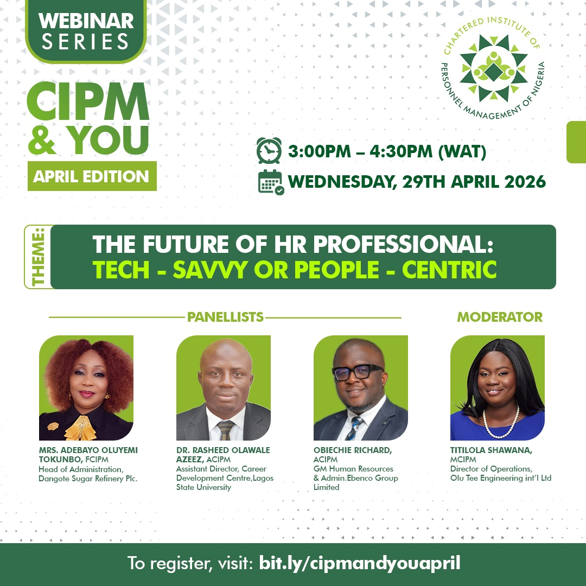
Overview
The question of whether HR professionals should be tech-savvy or people-centric presents a false choice. Technology cannot replace empathy, algorithms cannot independently build trust, and data alone cannot make employees feel seen, heard and valued. Technology can count people, but only people can make people count. An organisation may invest millions in advanced HR systems and still experience high employee turnover if wellbeing and human connection are neglected. While technology can efficiently process leave requests, it may not recognise an employee experiencing burnout. The future of HR therefore belongs to professionals who can combine technological competence with emotional intelligence, automate processes while humanising workplaces, and use innovation to improve the employee experience. The real question is not artificial intelligence versus human intelligence, but intelligence with heart: embracing innovation without losing sight of humanity.
Integrating Technology and People-Centred HR
The greatest challenge and opportunity for HR professionals is learning to integrate technology with human-centred practice. While many fear that AI will replace HR jobs, those who fail to adapt risk remaining transactional administrators rather than becoming strategic business partners. Technology should serve people, not displace the human judgement required to manage them effectively. This is particularly important in organisations where employees are more familiar with manual processes than digital systems. Successful adoption requires more than introducing new tools; it requires understanding organisational culture, interpreting data within its context and demonstrating how technology improves work. Attendance, productivity and training metrics are useful, but numbers alone cannot explain workplace realities. HR professionals must therefore commit to continuous learning, unlearning and relearning. Skills in descriptive, diagnostic, predictive, prescriptive and autonomous analytics can strengthen workforce planning and decision-making. However, technology is more likely to displace professionals who refuse to evolve than those who embrace it thoughtfully.
Leading Inclusive Technology Adoption and Managing Change
Resistance to technology often reflects how change is introduced rather than the technology itself. HR must promote adoption through clear communication, transparency, employee involvement and practical support. Employees are more receptive when they understand why a system is being introduced, the problems it will solve and the benefits it offers. Organisations should involve employees through pilot groups, change champions and opportunities to co-design new processes. Inclusive training and on-the-job learning are equally important, particularly for employees unfamiliar with digital tools. Just as professionals transitioned from typewriters to laptops, employees must be given the time and support to adapt to emerging technologies. HR leaders must also model the behaviours they expect from others. Building trust, addressing concerns and maintaining accountability throughout the transition can reduce fear and encourage participation.
The Human Capabilities That Keep HR Relevant
Technology can enforce rules, but it cannot independently establish fairness, legitimacy or trust. Ethical leadership, empathy, transparency, sound judgement, conflict resolution and due process remain essential HR responsibilities. These capabilities cannot be outsourced to algorithms. HR also plays a critical role in organisational development and culture. Culture is reflected in how people behave, interact and uphold shared standards. HR professionals must influence these behaviours while promoting accountability and excellence, even in environments resistant to change.
Contextual intelligence and crisis judgement are particularly important in public institutions where political and leadership transitions can disrupt organisational continuity. Institutionalising handover documentation and knowledge-transfer processes helps preserve organisational memory and responsibilities across administrations. HR must protect both the formal and psychological contracts that sustain employee commitment, loyalty and performance.
Building Digital Competence and Using Affordable Solutions
To remain relevant, HR professionals must strengthen their data literacy: the ability to interpret information and communicate the insights behind the numbers. Tools such as Excel, Power BI and SQL, alongside predictive analytics, can support workforce planning, turnover forecasting and evidence-based decisions. AI prompting is another valuable skill, enabling HR professionals to use AI tools for research, analysis and other routine tasks. Equally important is judgement engineering: critically evaluating system-generated outputs before acting on them. Organisations with limited resources do not necessarily need expensive technology to improve HR operations. They should prioritise standardisation over sophistication. Google Forms and Microsoft Forms can simplify recruitment applications, employee surveys and feedback collection. Scanned employee records stored in properly organised, secure folders or authorised cloud platforms such as Google Drive and OneDrive can improve documentation and retrieval. WhatsApp and Microsoft Teams can also strengthen internal communication, employee recognition and engagement. Even modest technological investments can improve efficiency, documentation, communication and the overall employee experience when implemented thoughtfully.
Ethical, Fair and Responsible Use of AI
AI-driven HR decisions raise important concerns about bias, fairness, privacy and accountability. Since AI systems learn from historical data, they may reproduce or amplify existing discrimination. Recruitment algorithms, for example, could unfairly disadvantage candidates from particular backgrounds if trained on biased information.
HR professionals must scrutinise the data and algorithms used, consider applicable Nigerian laws and regulations, and ensure that AI-generated recommendations are reviewed by qualified people. Accountability remains with the organisation and the professionals responsible for adopting and using these systems. Employee privacy must also be protected through secure information systems, role-based access controls and a zero-trust approach. Access to sensitive records should be restricted to authorised individuals according to their responsibilities. Strong passwords and automated security controls are useful, but employee awareness and responsible data-handling practices are equally important.
What Should Never Be Fully Automated?
Certain HR activities require human oversight, particularly those with significant consequences for employees. Although technology can support CV screening and assessment scoring, final recruitment decisions should consider integrity, values, cultural alignment and long-term potential. Similarly, performance management should not rely exclusively on automated scores or spreadsheets. Broader assessments, including 360-degree feedback where appropriate, can provide a more balanced understanding of employee performance. Attendance management also requires contextual judgement; rather than automatically penalising lateness, HR should understand the circumstances and determine whether support or intervention is necessary. Recruitment and retention strategies must also accommodate generational differences without compromising fairness. Standardised and transparent processes should be complemented by flexible communication channels, recognising that some candidates prefer emails while others respond better to calls or text messages. Timely feedback, respectful engagement and keeping communication commitments are essential to a positive candidate experience.
The Way Forward: Human and AI Collaboration
AI–human collaboration must reflect the culture, resources and realities of each organisation. In the Nigerian context, HR professionals should work with relevant stakeholders to select tools that address actual workplace needs while recognising cultural expectations and differences in how employees interpret change.
Ultimately, the future of HR is not about choosing between being tech-savvy and people-centric. It is about developing the competence to use technology intelligently while preserving the human values that give organisations meaning. Technology can improve efficiency, provide insights and scale processes, but empathy, fairness, trust and sound judgement remain fundamental to effective people management. The HR professional of the future must be digitally confident, emotionally intelligent, ethically grounded and committed to continuous learning. Innovation should make HR more human, not less.
This thought leadership piece was adapted from the April 2026 edition of the ‘CIPM and YOU’ webinar and represents the opinions of the panelists during the session.