
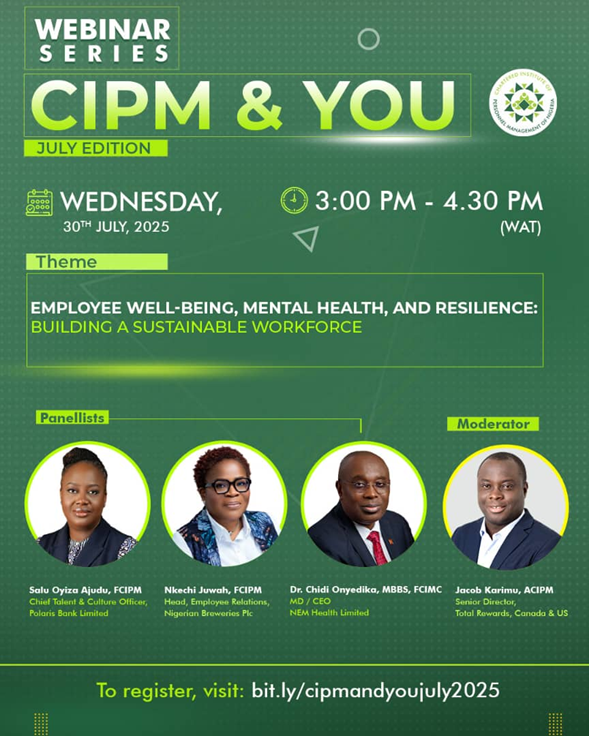
Overview
There is a conversation that rarely leaves the confines of boardrooms, often concealed behind polite smiles in open offices and hidden beneath impressive productivity metrics. Yet, it is one of the most defining issues of our time: employee well-being, mental health, and resilience. We live in a world where “hustle” is glorified, rest is mistaken for laziness, and stress is worn like a badge of honour. But the reality is simple, a burnt-out workforce cannot build a sustainable future. According to the World Health Organisation (WHO), depression and anxiety cost the global economy over $1 trillion annually in lost productivity. In Nigeria, recent studies reveal that more than one in four employees experience symptoms of stress-related disorders, yet many remain silent for fear of stigma or job insecurity. HR professionals and people managers must ensure that workplaces are safe, and policies are truly people-focused and not mere paperwork. Resilience should never be mistaken for a license to overwork or exhaust employees. True resilience is not merely surviving the fire, it is ensuring people do not burn to ashes in the process. Mental health is not a “soft” concern; it is a strategic advantage. A resilient, mentally healthy workforce boosts creativity, fosters loyalty, reduces absenteeism, and drives sustainable performance. Employees should not be seen as just units of labour, but as human beings with lives. Too often, we mistaken success for the sheer number of hours worked instead of the quality and impact of the work done. Businesses do not survive because they are big, they survive because their people are strong. And that strength must be nurtured. Support must be intentional. Well-being must be non-negotiable. It is necessary to move from mere talk to true transformation.
Workplace Policies and Benefits to Support Employee Health and Well-Being
The World Health Organization (WHO) defines health as “a state of complete physical, mental, and social well-being, and not merely the absence of disease or infirmity.” When considering employee health and how to maintain it, three core dimensions must be addressed: physical well-being, mental well-being, and social well-being. Together, these form the holistic nature of employee health. To provide effective benefits that support and sustain employee health and well-being, the following should be considered:
1. Comprehensive Medical Insurance: A robust health insurance plan should offer not only corrective care (treatment when illness occurs) but also preventive and wellness benefits. Focusing solely on corrective care is insufficient. Preventive and wellness components may include:
- Mental health coverage, such as counseling services and psychological support.
- Wellness programs, including regular check-ups, fitness initiatives, and lifestyle support.
- Chronic disease management, ensuring ongoing support for employees with long-term health conditions.
- Employee Assistance Programmes (EAPs), providing confidential resources for personal and professional challenges.
- Maternal and childcare services including policies for employees with children under the age of five.
2. Fitness and Wellness Initiatives: Insurance packages or workplace programs should encourage physical activity and healthy lifestyles, such as gym memberships, fitness classes, or ergonomic workplace setups.
When these elements, physical, mental, and social health, are addressed through preventive care, wellness support, and responsive medical services, organisations can lay a strong foundation for maintaining a healthy, engaged, and productive workforce.
Measuring Employee Well-Being and Tracking Improvement
- Employee Engagement Surveys: HR should pay close attention to employee engagement survey responses, particularly around stress and well-being. Managers play a crucial role in this process. For example, they can ask team members to rate how they are feeling on a scale of one to ten, especially when managing seven to eight direct reports. Scores below seven should prompt follow-up questions to understand the underlying reasons. Modern tools, including AI-powered pulse surveys, allow HR to send short, targeted questionnaires to employees to gain real-time insights. Based on the feedback, managers can take meaningful action to support their teams.
- Absenteeism and Turnover Metrics: High absenteeism or frequent staff turnover within a team can be an indicator of deeper well-being issues. Often, managers play a major role, either positively or negatively, in these trends. Toxic management styles can severely harm workplace culture. HR should actively monitor for such patterns and enforce policies that do not tolerate toxic behaviour. Well-being is more than just physical health; it also involves mental, emotional, and social factors. In this regard, organisations should consider implementing Employee Assistance Programmes (EAPs), as health insurance alone is no longer sufficient.
- Weekend Work and Overtime: In cases of twenty-hour operations, HR must ensure workloads are reasonable and employees are not pushed toward burnout. While some workers may opt for extra hours to earn more income, sustainable performance cannot be achieved if staff regularly work six or seven days a week. HR should implement policies that promote rest and recovery while balancing operational needs.
How HR Professionals Can Foster Work–Life Balance
- Flexibility: Research and data show that working full-time in the office does not necessarily equate to higher productivity. Work should shift toward outcome-based deliverables rather than simply “ticking the box” by being physically present. Presenteeism, staying in the office for appearance’s sake, does not guarantee meaningful contribution.
- Use of Leave: Organisations should have clear practices to ensure proper coverage when employees are on leave. This includes delegating authority to a stand-in and having a designated responder, so the employee can truly rest without being disturbed.
- Clear Job Roles: Employees often experience stress and anxiety when managers fail to define annual deliverables, provide the necessary resources, or arrange adequate training. Clear expectations and proper support reduce unnecessary pressure.
- Pulse Surveys: Short, targeted pulse surveys are effective tools for measuring employee well-being in real time and identifying areas that require immediate attention.
- Focus on Productivity not Presenteeism: Performance should be measured by output and quality, not by the number of hours spent in the office or waiting for a manager to leave before going home.
- Consider the Employee Ecosystem: An employee’s personal circumstances, such as family challenges, domestic violence, or life transitions, can significantly impact their well-being. Organisations should offer relevant support, whether for employees facing personal crises, stepping into managerial roles, or navigating onboarding into a new company or department.
- Co-Creation of Well-Being Initiatives: Well-being programmes should be co-created with employees to ensure they address real needs within the specific organisational context. Customizing these programmes increases relevance and impact.
Building a Culture That Encourages Breaks and Time Off
The cultures organisations build have a direct impact on employee wellness, leadership effectiveness, workload management, and the return on well-being investments. Addressing this challenge requires looking at it from multiple perspectives:
- Shifting Mindsets: Well-being must be viewed strategically as a factor that influences business performance and long-term sustainability. Supportive policies should promote taking breaks, with managers and leaders setting the tone by taking breaks themselves and encouraging their teams to do the same.
- Setting Healthy Boundaries: Practices such as sending emails after work hours or on weekends can heighten stress and create the perception that constant availability is the only path to recognition or reward. Leaders must lead by example, openly communicating when they are on leave or vacation and showing that they are not “superhuman.”When leaders model healthy behaviours that prioritise rest and rejuvenation, teams are more likely to follow suit. Over time, this fosters a culture where taking breaks is normalised, stress and burnout are reduced, and organisational productivity is strengthened.
How Managers Can Support Team Members Well-Being
This requires extensive coaching and educating of line managers. For example, in the Managerial Excellence Action Learning (MEAL) programme, managers receive tips and snippets on various aspects of effective team management, including strategies for supporting employee well-being. The goal is to ensure teams are not dysfunctional, but instead operate with high morale, strong engagement, and a healthy workplace culture.
Mental Health Resources and Support Services for Organisations
If an organisation provides medical insurance coverage for its staff, the insurance company should also ensure access to mental health services and Employee Assistance Programmes (EAP). Organisations must recognise the importance of EAP services, which should be part of the Health Maintenance Organisation (HMO) packages they purchase. Therefore, it is crucial to choose a medical insurance provider that offers not only curative care but also preventive and wellness services, delivered consistently on a monthly basis.
For mental health specifically, organisations should have robust preventive schemes. This includes providing mental health training for managers, line managers, and unit heads, as they are often the first to notice behavioural changes in employees. Unfortunately, many managers overlook the welfare of their team members. When managers are trained to recognise early warning signs, they can flag concerns to HR for timely intervention. Such proactive measures ensure that potential mental health issues are addressed before they require curative treatment.
How HR Can Create a Safe and Supportive Environment That Encourages Team Members to Openly Discuss Mental Health Concerns with Either HR or Their Managers
- Provide training and awareness on recognising the signs of mental health issues.
- Introduce a “Know Your Colleague” initiative to encourage fun, non-stigmatising feedback that drives engagement.
- Foster comfort and familiarity so employees feel safe sharing personal challenges.
- Build connectedness and rapport to encourage conversations beyond work matters.
- Create a psychologically safe environment where people can speak openly about their realities and struggles.
- Ensure HMOs include Employee Assistance Programmes (EAPs) and support them with consistent awareness and communication on mental health.
Ways Organisations Can Measure and Interpret Workforce Stress Levels
If a profit and loss account can reflect an organisation’s financial health, then a well-being index can serve a similar purpose for assessing employee health and workplace culture. The well-being index is a set of tailored questions, customised to reflect an organisation’s unique realities, measuring aspects such as stress levels, work–life balance, and psychological safety. Administered annually, it provides trends and insights over time.
Making Managers Training Effective
Beyond training managers, it is essential to provide the right information and tools. Health assessments can be administered to employees, generating scores that help identify those who may need targeted support. While not everyone will be struggling, some employees may face challenges. It is important to determine whether these stressors fall within HR’s control, such as unclear work expectations, inadequate resources or training, or toxic team dynamics and leadership. These factors can be addressed by the organisation and HR professionals. Even if employees do not openly share their concerns, data can reveal underlying issues. Therefore, effectiveness goes beyond training managers, it requires embedding well-being practices into the organisation’s everyday ways of working.
What HR Can Offer to Support and Manage Workplace Stress
- Identify the main causes of workplace stress, such as work overload and toxic leadership.
- Establish policies to prevent toxicity and create a healthy work environment.
- Address economic and transportation challenges by:
- Providing staff buses to drop employees at nearby bus stops.
- Offering transport subsidies to ease commuting stress.
- Introduce flexible working arrangements to support work–life balance.
- Implement stress management programmes to help employees:
- Improve time management and prioritisation skills.
- Recognise their personal stress triggers and limits.
- Develop effective coping strategies.
- Organise regular management workshops to educate employees on handling diverse personal and work-related challenges.
- Ensure ongoing support measures are in place to help staff cope with stress effectively.
How HR Can Support Individual Team Members and the Organisation in Adapting to Change
People often see change as a source of anxiety because it introduces uncertainty. HR’s role is to shift this perception, helping employees view change as an opportunity for growth, resilience-building, and improved organisational performance. Change involves both the practical aspect, what needs to be done, and the human element, which deals with emotions, concerns, and the personal impact on employees. From an individual team perspective, HR should:
- Ensure clear, consistent communication about the change, what it involves, how it affects people and the organisation, and its benefits.
- Communicate transparently, avoiding sugar-coating, so employees are not caught off guard.
- Create space for feedback, allowing employees to ask questions and receive honest, timely responses.
- Provide ongoing coaching and support throughout the transition.
From an organisational perspective, HR should:
- Align change initiatives with the company’s strategic objectives and priorities.
- Assess organisational readiness to avoid failed agendas.
- Secure early leadership engagement and buy-in.
- Develop a structured implementation plan, with clear actions, timelines, success criteria, and milestones.
- Continuously monitor, evaluate, and adjust strategies based on feedback and progress.
- Train employees to embrace change, ensuring they understand how it benefits them and the organisation.
Actionable Measures HR Can Implement to Support Employees in Overcoming Workplace Challenges
HR must understand that their role goes beyond hiring employees, they must also actively support and contribute to their success. Practical steps include:
- Resilience Training: Engage psychologists or psychiatrists to provide employees with tools and techniques for coping with stress, recognising that stressors may not always be obvious. These could stem from home life, managerial issues, workplace culture, or lack of adequate resources.
- Emphasise Psychological Safety: Foster a culture where employees feel safe to share ideas, challenge the status quo respectfully, and speak up when things are not working. Psychological safety is a strong indicator of a healthy culture. Managers should avoid acting as though they have all the answers and instead remain open to input.
- Co-create with Employees: Involve employees in designing and shaping programmes, tools, and well-being initiatives. Gather their input, ensure they feel ownership of the solutions, and empower them to act as champions of the initiatives.
Conclusion:
Employee well-being is not an HR “extra”; it is a strategic necessity. When organisations intentionally foster psychological safety, equip managers with the right tools, and design policies that truly support people, they do not just reduce burnout, they unlock innovation, loyalty, and sustainable performance. A healthy workforce is the strongest foundation any business can build on, and well-being must be embedded into the culture, not treated as a campaign. Because when people thrive, organisations flourish.
This thought leadership piece was adapted from the July 2025 edition of the ‘CIPM and YOU’ webinar and represents the opinions of the panellists during the session.