Overview
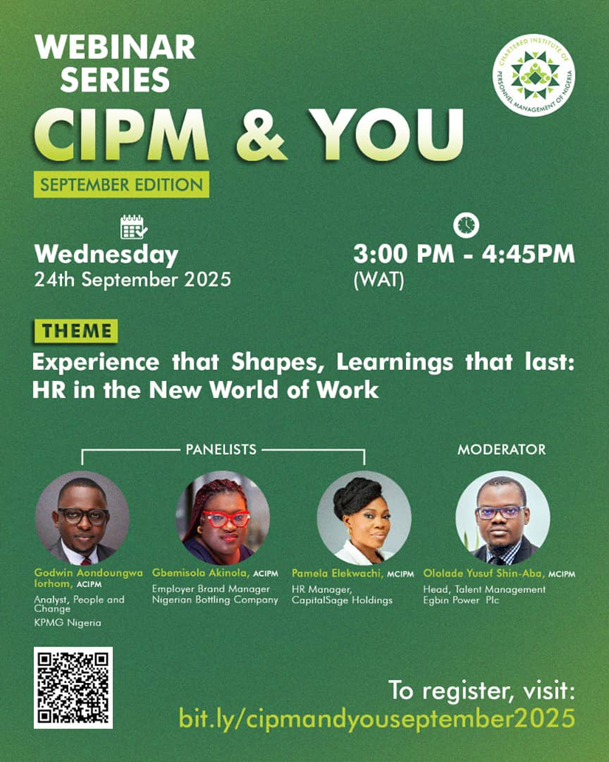
The future of work belongs to those who are shaping it today. The theme, Experience That Shapes, Learnings That Last: HR in the New World of Work is timely, because the world of work has already transformed. Artificial intelligence is no longer a distant concept; it is here, it is real, and in some cases, it is recruiting faster than HR managers themselves.
A recent example from the global entertainment industry illustrates this shift. A major record label signed a multi-million-dollar deal, not with a human artist, but with an AI-generated musician. The backlash was immediate, as several American artists criticised the move, calling it a slight to human creativity. That moment perfectly captured the tension we now face: the clash between human imagination and machine capability. And this same tension is unfolding across industries everywhere.
Yet amid all this disruption, one truth remains undeniable: people are the ultimate competitive advantage. Machines can simulate, but they cannot replicate the authenticity of human experience, the empathy of human interaction, or the resilience of the human spirit. This is where HR plays a critical role, ensuring that talent, not technology, remains at the core of progress.
Research shows that executives are experiencing or expect to experience a skills gap in the coming years. This means any organisation that fails to convert learning into lasting capability will be left behind in the global race for relevance. HR is no longer just Human Resources; it must now stand for Human Relevance. HR professionals are not merely managing processes; they are curating experiences. They are not just teaching skills; they are crafting learning that endures.
As Maya Angelou famously said, “People will forget what you said, people will forget what you did, but people will never forget how you made them feel.” This is the true power of HR: shaping experiences that inspire lasting transformation. Experience is the seed, learning is the water, and HR is the gardener. What we nurture today determines what will grow tomorrow. As Alvin Toffler noted, “The illiterate of the 21st century will not be those who cannot read and write, but those who cannot learn, unlearn, and relearn.”
Critical skills HR professionals need to thrive in the new world of work
HR has already stepped fully into the new world of work, and the ship sailed long ago from the era when HR practitioners were viewed merely as administrative staff. The profession has evolved beyond process management into a strategic partnership role that directly supports and influences organisational success.
Critical skills HR professionals need in the new world of work include:
- Digital Fluency: HR professionals must move beyond basic digital knowledge to true fluency. This means being able to create value through technology and make informed decisions using data. Data-driven insights should guide all aspects of HR, from talent and performance management to culture and employee engagement. The ability to interpret data and connect it to business outcomes is now essential for HR to function as a strategic business partner.
- Change Agility: In an environment where change is constant, HR must not only adapt personally but also guide others through transitions. Supporting employees in navigating change, fostering resilience, and leading transformation efforts are increasingly critical capabilities. However, these skills hold little value if HR practitioners lose sight of the “human” in human resources.
- Human-Centered Leadership: People must remain at the heart of HR practice. This requires empathy, a commitment to diversity and inclusion, and the ability to support multigenerational and culturally diverse workforces. Regardless of how much technology HR adopts, human-centered leadership must remain a core competency. It is this people-first approach that enables HR professionals to truly thrive in the new world of work.
How organisations leverage technology and new practices to adapt to post-pandemic workforce realities
Before 2020, it seemed almost impossible for organisations to operate effectively with employees working entirely from home, or with only a few staff members coming into the office on specific days. Today, however, this has become a standard practice.
Advantages of Hybrid Work
- Cost Savings for the Organisation: Significant operational costs, such as fuel and diesel required to power generators throughout the workday, are greatly reduced when fewer employees are on-site.
- Increased Employee Productivity: Many employees have reported that working from home minimises distractions and enables them to deliver their tasks more efficiently. Without the interruptions common in office settings, employees tend to meet their deadlines with fewer hindrances. For organisations that adopt a hybrid work model, it becomes essential to rethink their approach to performance management. They can develop an internal technology platform that allows managers to track employee performance from anywhere in the world. Employees can log into the system, speak with their managers, document discussions, and update their records, all without the need to be physically present at the office. Another technology organisations can embrace is a Learning Management System (LMS). Since it is no longer feasible for all members of a unit to be in the office simultaneously, the LMS enables training to continue seamlessly. Courses are assigned to employees regardless of their location, and they can log in, complete their lessons, take assessments, and obtain certifications from anywhere in the world.
Effective learning interventions for building resilient and future-ready teams.
Beyond all formal learning interventions an organisation may offer, the most powerful enablers of growth are rooted in its culture. Training sessions, classrooms, and workshops are valuable, but they are not enough on their own. Employees must feel that they work in an environment where they have the flexibility to experiment, make mistakes, and fail forward. When people feel safe to take risks, they become more willing to innovate and drive change.
Psychological safety is essential. In cultures where employees are encouraged to apply what they learn without fear of blame, learning becomes truly transformative. Among the most effective learning interventions, coaching and mentoring remain timeless. These methods continue to demonstrate their impact because they are personalised and tailored to individual needs. Unlike generic courses or standardised training programs, coaching addresses short-term, specific development areas, while mentoring supports long-term growth and helps individuals build a broader perspective. Both approaches have consistently proven to be among the most impactful interventions available.
Another highly effective approach to learning intervention is cross-functional project work. This exposes employees to new ideas, diverse skill sets, and fresh ways of thinking. It pushes them outside their comfort zones and gives them practical opportunities to apply newly acquired skills. Learning becomes meaningful only when employees have the mechanisms and opportunities to practice what they have been taught in real-world situations.
Leveraging technology through digital learning platforms is also critical. Such platforms allow employees to access training at their own pace and at the time of need, without waiting for a class size or a scheduled session. They can explore content that aligns with their specific development goals and learn in real time. However, all these interventions, no matter how well designed, will have limited impact without a strong culture of psychological safety. Employees must feel empowered to express themselves, select the right mentors or coaches, and engage in learning relationships that rely heavily on trust and compatibility. Ultimately, it is not just about having these systems in place; it is about ensuring that people have the freedom and confidence to use them effectively.
How to ensure that learning is not just a one-off event but leads to sustained behavioural change over time.
This is a shared responsibility that requires both individual commitment and organisational support. Individuals must be willing to adapt, to continuously learn, unlearn, and relearn. As the saying goes, yesterday’s excellence is today’s mediocrity. What you mastered yesterday may no longer be relevant today, and relying solely on past achievements will cause you to fall behind. This is why the ability to let go of old patterns and embrace new knowledge is essential. As individuals learn and begin to apply new insights to their daily tasks and deliverables, these behaviours gradually become part of their routine. Learning becomes ingrained, enhancing their effectiveness and overall performance.
Key strengths expected to define HR practice in Nigeria and globally over the coming 3 to 5 years.
These trends are not emerging in the distant future, they are already shaping the HR landscape today. One of the most significant shifts is the widespread adoption of technology and AI solutions across various HR functions. For example, technology has transformed recruitment. It is now common for a single job posting to attract over 5,000 applications. It is nearly impossible for recruiters to manually review that volume of CVs. Even if they attempted it, the process would be exhausting, inefficient, and time-consuming.
Another major trend influencing HR is skills-based hiring. Increasingly, employers are prioritising skills and practical capability over formal qualifications. Skills often outweigh academic qualifications in determining job performance.
Similarly, some fintech companies in Nigeria now hire purely based on technical ability. Instead of asking for certificates or degrees, they administer coding tests or skills assessments. If a candidate demonstrates the required level of competence, they are offered the job, regardless of their educational background.
The focus has shifted to what candidates can do and the value they can bring, not the certificates they possess. This skills-first approach is already redefining hiring globally and will remain a dominant trend in HR practice.
Principles HR must never lose sight of, irrespective of workplace transformation.
People today are working to live, not living to work. This means that beyond their professional responsibilities, individuals have full lives with multiple dimensions that demand their energy and attention. As the workplace evolves, with trends like agility, HR technology, AI, multi-generational teams, and remote work, employees are showing up to work while balancing other areas of their lives.
When people are placed at the center of organisational policies, structures, and practices, it becomes easier to support them effectively. Providing an enabling workplace allows employees to thrive not just in their roles but in their broader lives. When individuals feel empowered, valued, and supported, they naturally perform at their best. A fulfilled employee will often go above and beyond, completing tasks with initiative and dedication, not out of obligation but from a genuine engagement.
It is essential to recognise that employees are more than their roles or titles, they have concerns, aspirations, and responsibilities beyond work. By fostering a culture that empowers and supports the whole person, organisations see results organically. Employees will shine, take ownership, and achieve outcomes without constant oversight.
Thus, the humanity inherent in HR must never be lost, nor should the ethical leadership that underpins it. Balancing human-centered practices with organisational objectives is what allows both people and business to flourish.
This thought leadership piece was adapted from the September 2025 edition of the ‘CIPM and YOU’ webinar and represents the opinions of the panellists during the session.